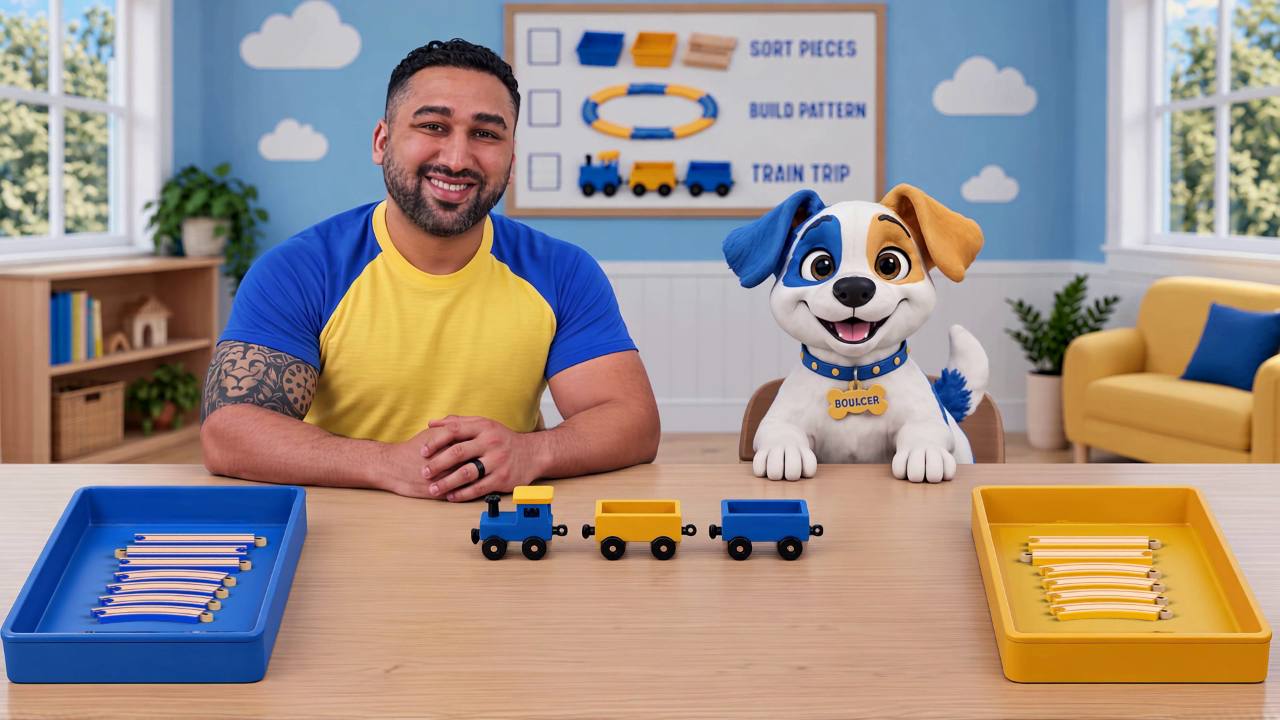
For train fans: The Train That Kept Trying
A toy train starts an adventure with blue-and-yellow track pieces, a repeating pattern and friends who keep trying. Choose this story if your child is curious about trains, making things fit or imagining a journey. You might wonder together where the train will travel, without needing to predict the right answer. For a separate offscreen idea, our pretend-train guide invites your family to choose a destination and make an optional picture ticket.
For animal and color fans: The Coloring Book Jungle
Five bright crayons lead Edmund and Bouncer into a jungle story with Frog, Parrot and Tiger, including a search for a missing blue crayon. Choose this adventure for a child interested in animal friends or colorful clues. A shared comment could be as simple as noticing the animal on screen. Afterwards, the jungle story-making guide offers an entirely new family safari: choose a character and invent what happens next.
For seasonal play: The Friendly Halloween Helpers
Happy pumpkins, paper ghosts and helping friends shape this Halloween adventure. A grown-up can preview it and decide whether its theme suits the child today. If you would like a seasonal activity, the sound-scene guide offers familiar quiet sounds and a completely silent version. You can also turn that activity into an ordinary autumn doorstep visit or choose a different adventure.
Ages 2–3: notice one thing together
Sit where you can share the experience and follow what catches your child’s interest. They may point to Bouncer, make a train sound or watch quietly. Name one thing you both notice and allow some quiet space too. There is no need to turn each scene into a question or ask for an answer. The choice to watch, pause, stop or do something else stays with your family.
Ages 4–6: leave room for a little wondering
An interested child might tell you which character they like or suggest what could happen next. Try one open invitation such as “What would you try?” and listen to their idea. You do not need a correct prediction, a completed checklist or a discussion after every scene. A different idea can become the beginning of your own later pretend game. Your child can also enjoy the story without talking about it.
Choose an offscreen next step—or simply finish
One picture, a pretend ticket or a small shared story can carry an idea into play. Pick a linked activity only if it interests your child, and let it change as you go. You can also simply finish the story and move on with your day. The grown-up resources below offer more ideas for sharing media and making connections with everyday experiences. Your family sets its own media choices and routine.
Grown-up questions
Can we watch the full episodes on this page?
The full stories open on YouTube through the clearly labeled links above. This page helps grown-ups choose a story and find related play ideas.
Do we have to start with the train story?
You can use the interests above to choose a first story. This guide does not require an episode order or a finished activity before trying another adventure.
Is EZ Bounce Games also a preschool app?
The Apple App Store currently rates EZ Bounce Games 9+, which differs from the show’s ages 2–6 guidance. A grown-up can review the official listing before choosing an app.
More for grown-ups
For more grown-up reading, explore these resources about sharing media and connecting stories with everyday play.
American Academy of Pediatrics / HealthyChildren.org resource ↗ NAEYC resource ↗