Choose a place worth pretending about
Settle on a clear floor mat or sit on a stable seat with feet supported. A grown-up stays close and keeps the area clear; no climbing, linked chairs, ropes or moving furniture are needed. Ask where your imaginary train should go. Offer two possibilities if that helps: an animal picnic or a snowy hill. Point to a space in the room and call it your destination. Everybody can stay seated for the whole journey.
Give your ticket a job
Use a large piece of paper and a chunky, age-appropriate crayon to make a picture ticket. It can show the destination, a pet passenger or a made-up train symbol. Scribbles and a finger drawing on the tabletop work too. Ask what the ticket tells the station announcer. If your child would like words, write their chosen destination and read it back. Leave names, addresses and real travel details off this imaginary ticket.
Ages 2–3: take a short pretend ride
Be the announcer and say, “Our train is going to the puppy park.” Invite your child to show the ticket, wave or point toward your pretend destination. Describe one thing outside the window: “I see a tall tree.” They might show you something else, make a train noise or simply listen beside you. Announce arrival whenever they are ready. One departure and one arrival can be a complete adventure.
Ages 4–6: plan the route and the roles
Let your child choose who will drive and who will announce the stops. On paper, draw a line between the station and the destination, adding one landmark of their choice. They can explain what passengers see before they arrive. Wonder aloud about a harmless change: “The cloud garden is having a picnic today. Shall we stop there or keep going?” Let the child explain the decision and make a new announcement. This is their imagined world, not a test of real railway rules.
Open the pretend window
Take turns describing something passing by. One person might say, “There's a tiny house with a huge front door,” while the other points to an imaginary rooftop. Use your home language, gestures or a picture to add details. You can also play a quiet version: each person draws something seen from the window, then shares it. Avoid adding a long list of instructions; a single interesting sight can carry the whole journey.
Arrive, then bring it back to Bouncer
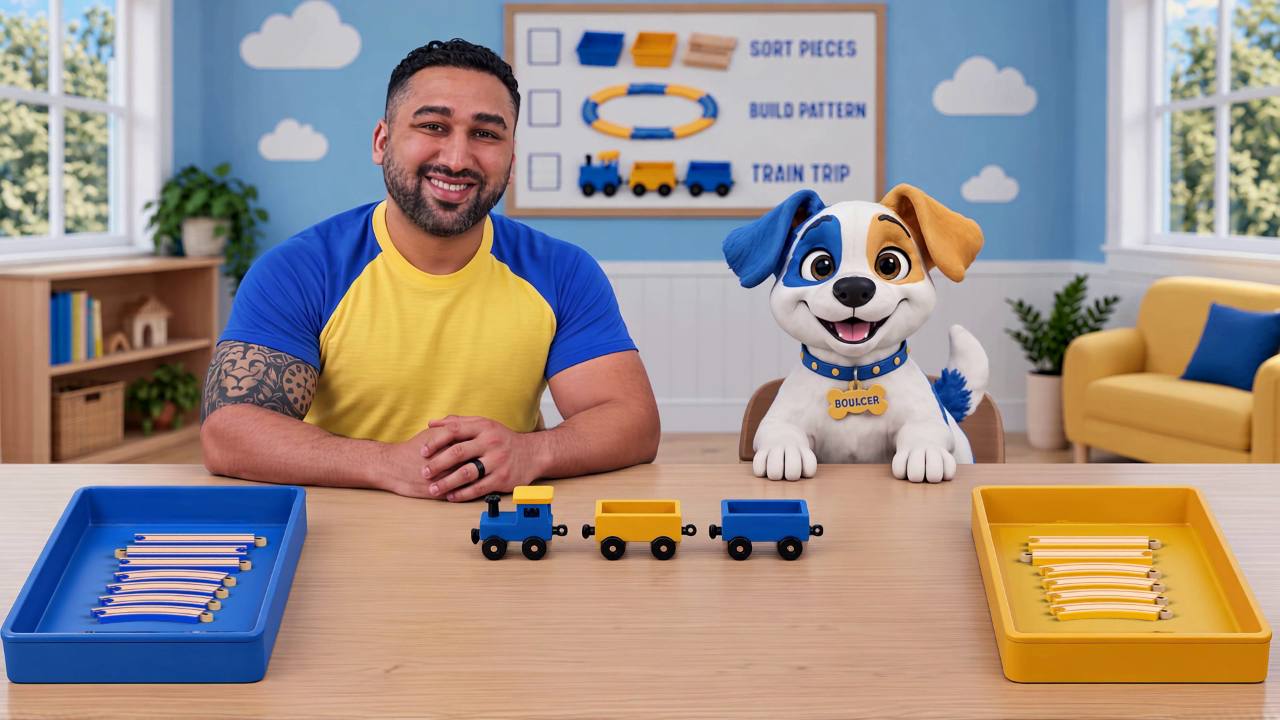
Announce your stop and invite one sentence, gesture or drawing about the visit. Your child can keep the ticket for another pretend ride or put it away. If your family chooses to watch, The Train That Kept Trying is the matching full Edmund and Bouncer story on YouTube. The episode's toy-train adventure is inspiration; this page does not reenact a real journey or require building its track. A grown-up can choose the story, close the screen and become the next passenger.
Grown-up questions
Do we need to build a train track?
No. This activity uses roles, a destination and an optional picture ticket. You can stay seated and pretend without any train equipment.
Does the ticket need words or numbers?
No. A picture, a mark or a pretend ticket in your hand is enough. A grown-up can add a requested destination word without making it a writing task.
A little more for grown-ups
A picture ticket can be anything your child chooses. These grown-up resources explore pretend roles, family conversation and using marks and words during play.