Start with what you actually know
Ask the host about the setting, activities, timing and where a child can take a break with their caregiver. Tell your child the confirmed parts in plain language. It is fine to say, “We do not know which game they will choose.” Avoid promising a favorite food, character or activity before it is confirmed.
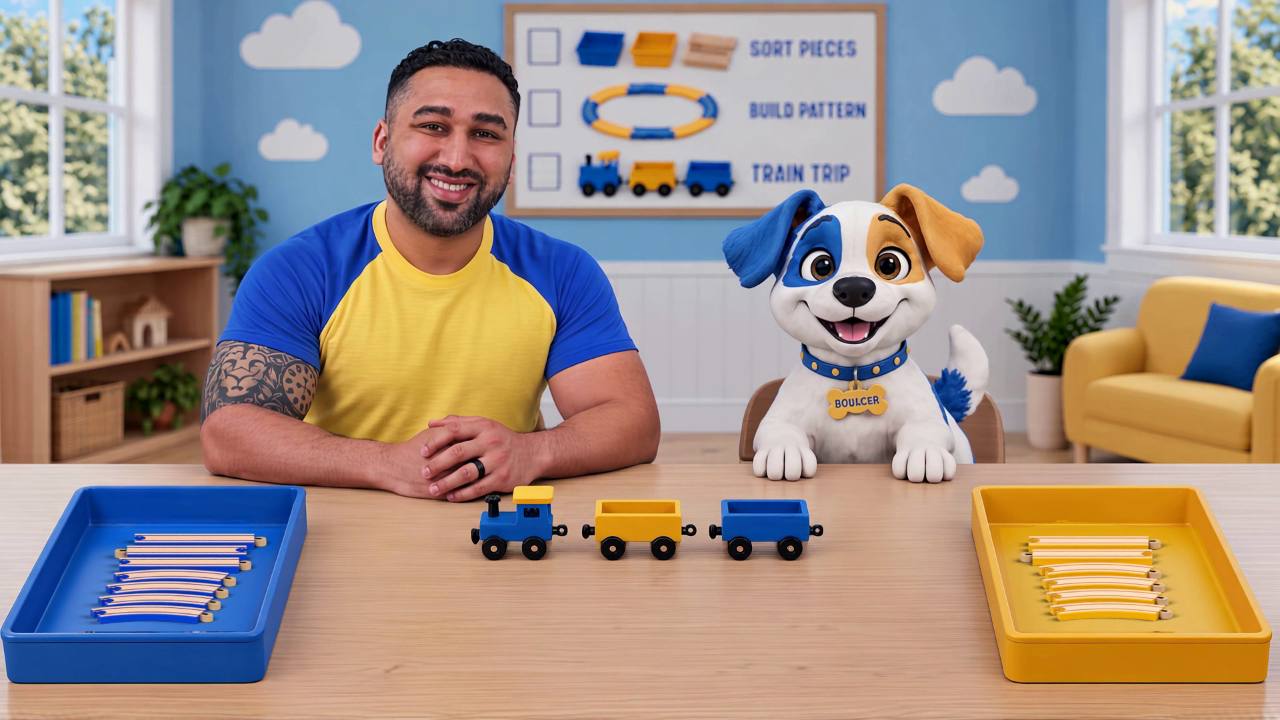
Choose a familiar toy to be your pretend guest. You can imagine Bouncer visiting, use a sock as a character, or play the guest yourself.
1. Make a little picture invitation
On one sheet of paper, draw three large pictures: hello, play and goodbye. A waving hand, a toy and a door are enough. Let your child add marks or point while you explain. These pictures show your pretend visit; the real party may happen in a different order.
For a child who prefers fewer choices, use just hello and goodbye. For a child who enjoys planning, add a picture for a break. You are making a conversation starter, not a checklist your child must complete.
2. Try arriving together
Place the toy beside you and pretend the other side of the table is the party. Say, “We have arrived. How would you like to say hello?” Offer a wave, a spoken hello, or standing beside you while you greet the host. A hug, handshake or performance is not required.
Swap roles if your child wants to welcome you. Ask one useful question: “Where could our guest sit or play?” Let your child point to a place. Keep the pretend visit small enough that both of you can follow the story.
3. Choose how to join
Put a familiar drawing or toy in the pretend party area. Model three options: “I can join,” “I can watch first,” or “I can stay with my grown-up.” Your child can say the words, point or have you speak for the toy. Try one choice and see where the story goes.
If the toy wants a break, move it beside you and pause the game. Practice a phrase your family might actually use, such as “I need a quiet minute.” At the real event, follow the caregiver and host’s plan for a supervised break; do not send a young child away alone.
4. Give the visit an ending
Point to the goodbye picture and tell the toy what comes next: “Our pretend visit is finished. We are going home.” Your child can wave, give a thank-you message or simply help the toy leave. You can model polite words without requiring your child to recite them.
Ask, “Is there something you want to know about the real party?” Write down a question to check with the host later. If your child wants to play again, change one detail rather than rehearsing every possible surprise.
Keep the rehearsal flexible
For ages 2–3, one greeting and one goodbye may be plenty. For ages 4–6, invite your child to invent a different ending or tell you what the toy needs. These are options, not milestones. Skip the role-play if it is not appealing, and just look at the pictures together.
On party day, take your cues from your child and the actual situation. Pretend practice does not guarantee an easy visit. It gives you a shared way to talk about choices, and permission to change your plan.
A few questions
What if my child does not want to pretend?
Use the pictures to talk together, let the toy watch, or skip the activity. Participation is optional.
Should we practice every party rule?
Choose one or two useful moments. Ask the host about actual expectations and explain those simply; avoid inventing rules for a party you have not attended.
Ready for another little adventure?
Choose one of the three published stories with your grown-up, or keep playing here. Watching is optional; you can enjoy this activity on its own.
For grown-ups planning a real party
For practical planning beyond this pretend activity, explore EZ Peasy’s Long Island kids’ birthday ideas. Adults considering rental equipment can visit EZ Bounce House and ask about their actual event. Those are separate planning and rental websites; no form is needed for this activity.
Ideas behind the play
Head Start describes using pictures to discuss routines and activities. Our party rehearsal is an original adaptation for family conversation, not an endorsed program.